Access to healthcare and social care at a distance isn’t just possible – it’s proven to work. Citizens value it. Case studies show it delivers real results. A wide range of service solutions are already out there, and the good news is: you don’t have to start from scratch. You can learn from others, build on what’s already working. And the roadmap for service innovation? It’s already there. The time to act is NOW (well actually…it was yesterday).
Give us, citizens, what we need!
Access to health and social care services shouldn’t depend on where you live. Across the nordic, people are speaking up — sharing their stories and their hopes for a more connected, compassionate system.
In this film, five citizens share why distance-spanning health and care provision isn’t just a convenience — it’s a necessity.
What is the citizens experiences according to research?
A short summary of the scoping review of published research related to citizens perspective on digital health and care provision.
Get motivated – cases for inspiration
Seven years of studying the Nordics show plenty of inspiration. Leading model areas at the forefront of integrated healthcare and care have been mapped, professionals’ views collected, and tech-supported services identified that overcome distance and rural challenges. Let these insights inspire you to take the next step.
South Karelia Wellbeing Service County – a model area for integrated healthcare and care
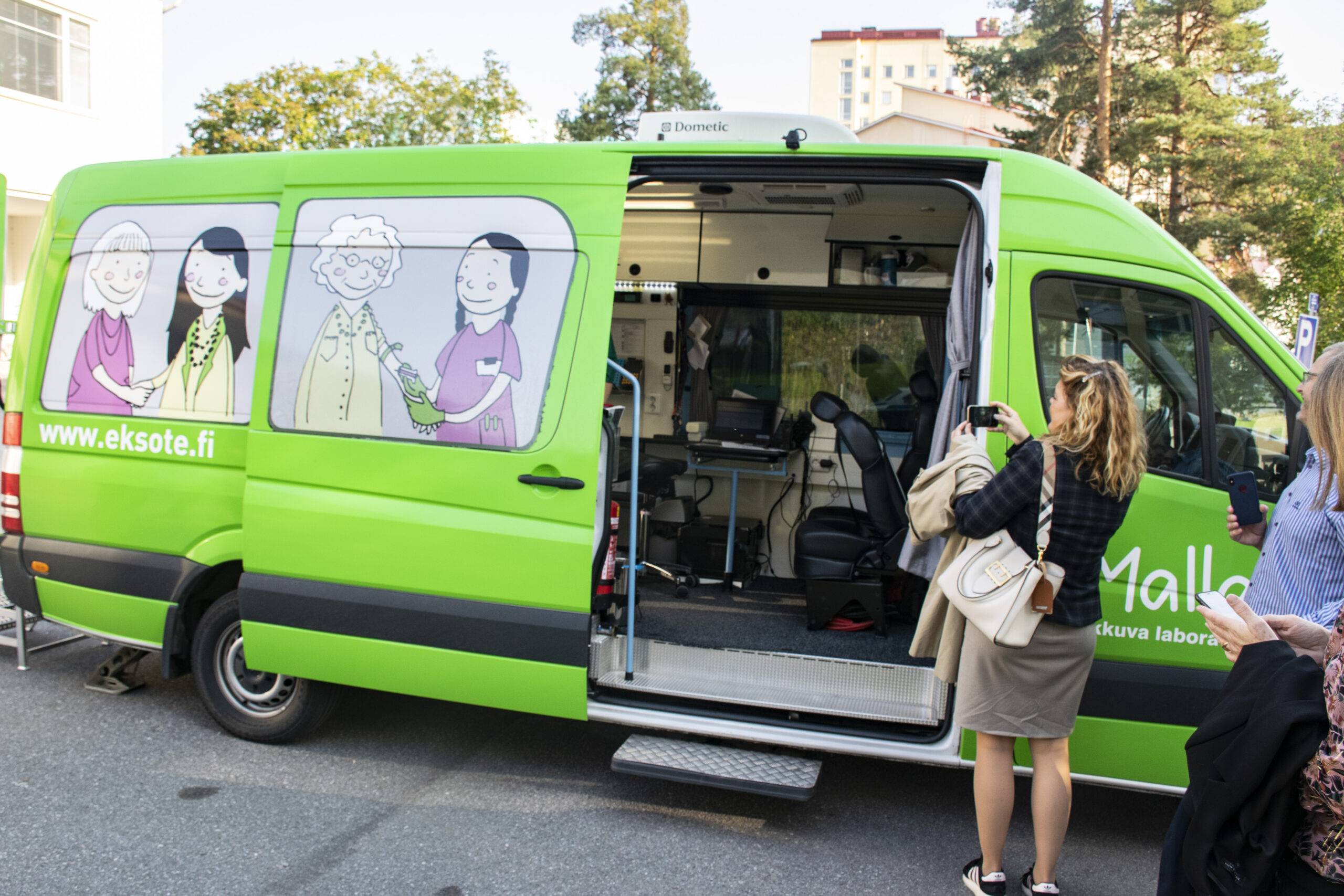
In the rural region of South Karelia, Finland, the regional organisation for social and health care realised they needed a digital shift. A strong vision and committed leadership resulted in action. Solutions that were implemented includes mobile health units and a regionally centralized data pool.
The transformation in South Karelia shows that with a clear vision and focused execution, the effects for the staff in healthcare and social care will come. It is possible to design a better working environment, while at the same time providing even better healthcare and social care. In fact, the two are connected.
South Karelia Well-being service county started their transformation 2010 – ten years too late according to their management.
Key learnings from South Karelia
Watch the movie to learn more about the digital transformation in South Karelia.
Five model areas of integrated care
In the publication “Integrated Healthcare and Care through distance spanning solutions – for increased service accessibility” five additional Nordic model areas for integrated health and care are presented;
The five model areas have cross-sectoral collaboration within health care and social care in focus and are examples of how system structures can be organized to ensure new integrated healthcare and social care services.
It’s all about the people
Stories from employees in South Karelia share core themes with stories we have collected from other organizations where a digital shift is ongoing. In Norway, Denmark and Finland, all stories point to the same 4 core benefits related to digital transformation of health and social care.
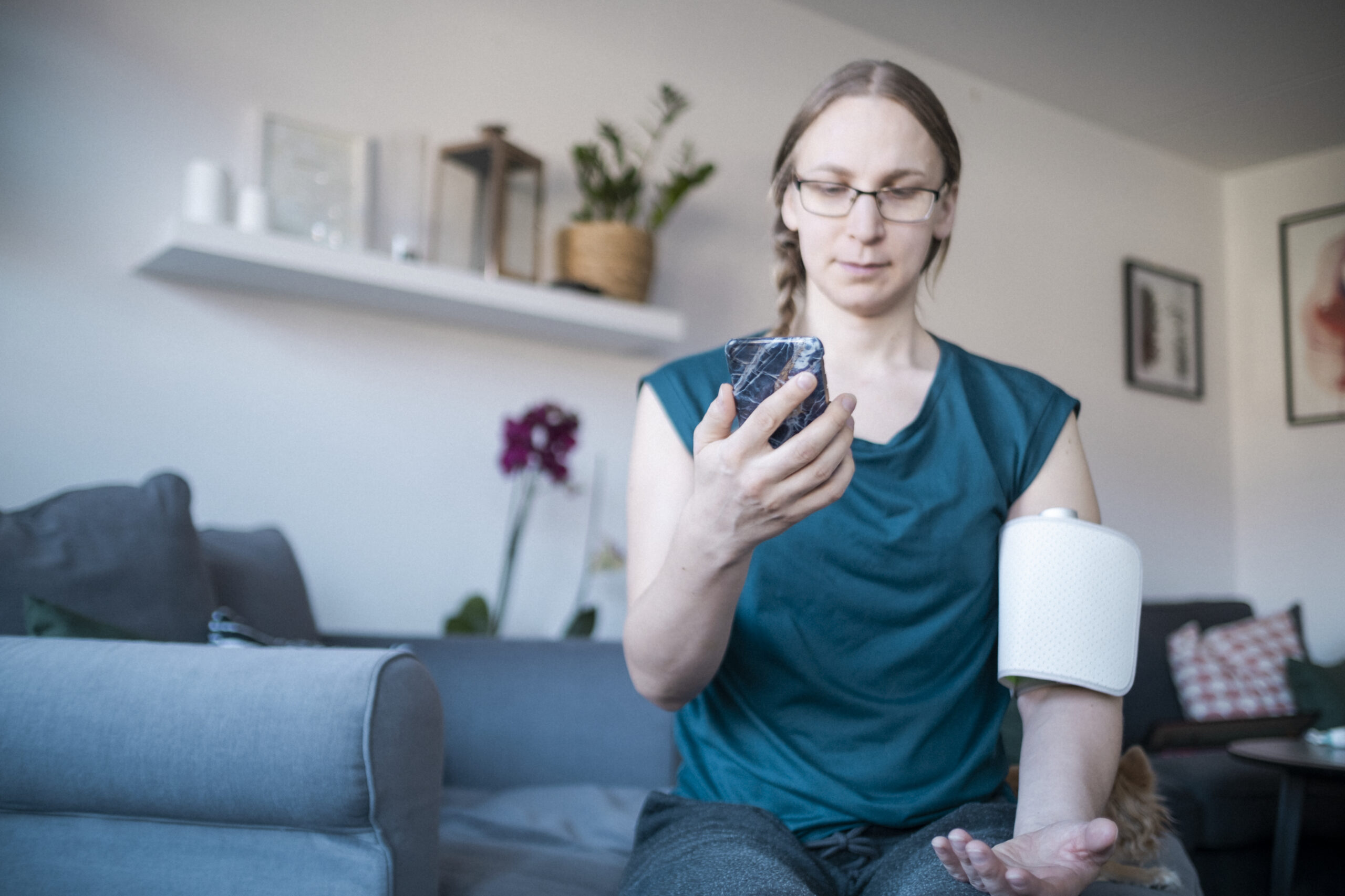
Digital services for healthcare and social care at distance
With an ageing population and sparsely populated areas throughout the Nordic region, digitalisation and remote solutions are important prerequisites for maintaining the quality of the Nordic welfare model. Developments have progressed quickly in recent years and there are now a number of well-established services that are available to the population at local or regional level.
In December 2019, a report was published in the Nordic priority project entitled Healthcare and care through distance-spanning solutions (VOPD) describing 24 digital services for healthcare and care through distance-spanning solutions in the Nordic countries. The services described in the report were well established and offered to the population in the region or the municipality in which they live.
Learn by others first
Staff shortages and rising care needs among aging populations are pushing a shift towards integrated health and care with technology support – especially in remote and rural regions which often face recruitment and demographic challenges. Explore the work done with rural actors during two nordic projects.
Learnings from service implementation
During the project Healthcare and care through distance-spanning solutions (VOPD), implementation of distance spanning solutions for healthcare and social care services were supported in 52 municipalities and 8 healthcare regions. By monitoring implementation, a number of common challenges and experiences was identified.
It comes out clear that the idea of an updated service model, by applying distance spanning solutions, often derives from a vision that certain technology could be applied to the benefit of the organisation. There is too little involvement of users, and too little time are set aside to anchor and create insight to the idea of updating the service model.
Successful service model update require that 80 % of the time is spent on questions related to culture of the organization, involvement of personnel, leadership and understanding the user perspective.
How to integrate healthcare and care
Development of integrated healthcare and care service solutions were supported in 16 different collaborations during the Nordic project Integrated healthcare and care (iHAC).
Conclusions from the work is that:

Make it happen
How do we bring technology to the people who need it most? The Norwegian “Roadmap for Service Innovation” offers a powerful strategy for driving digital transformation in healthcare and care. But real impact also depends on strong governance and effective collaboration frameworks.
Guide for implementation
Roadmap for service innovation is a structured guide containing specific action plans and templates as support for you who want to create welfare technology services for citizens regionally or locally.
The guide, Veikart for tjenesteinnovasjon was originally developed by KS in collaboration with the Norwegian Directorate of Health and a number of pilot municipalities in Norway. The tool recognizes that 80% of the transformation relates to culture, leadership and organizational development and the remaining 20% is technology.
The guide presents six phases, with two incremental initial steps:
WEBINAR: Roadmap for service innovation
Theoretical Framework for Governance
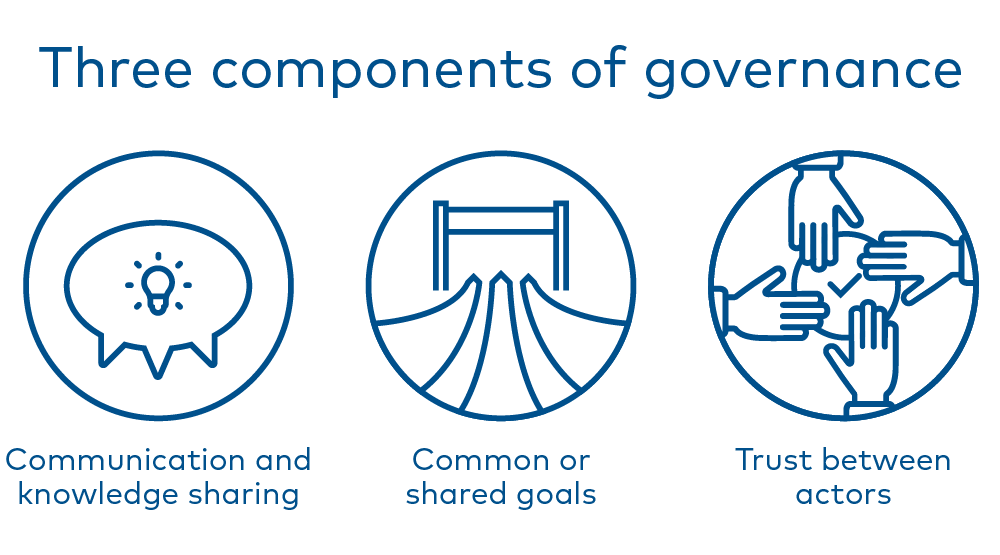
Developed by the Norwegian Centre for E-health Research (NSE), the Theoretical Framework for Governance outlines three key components of governance essential for successful integration of healthcare and care services; Communication and knowledge sharing, Common or shared goal and Trust between actors.
The framework helps identify what must be in place to improve coordination and increase service accessibility.